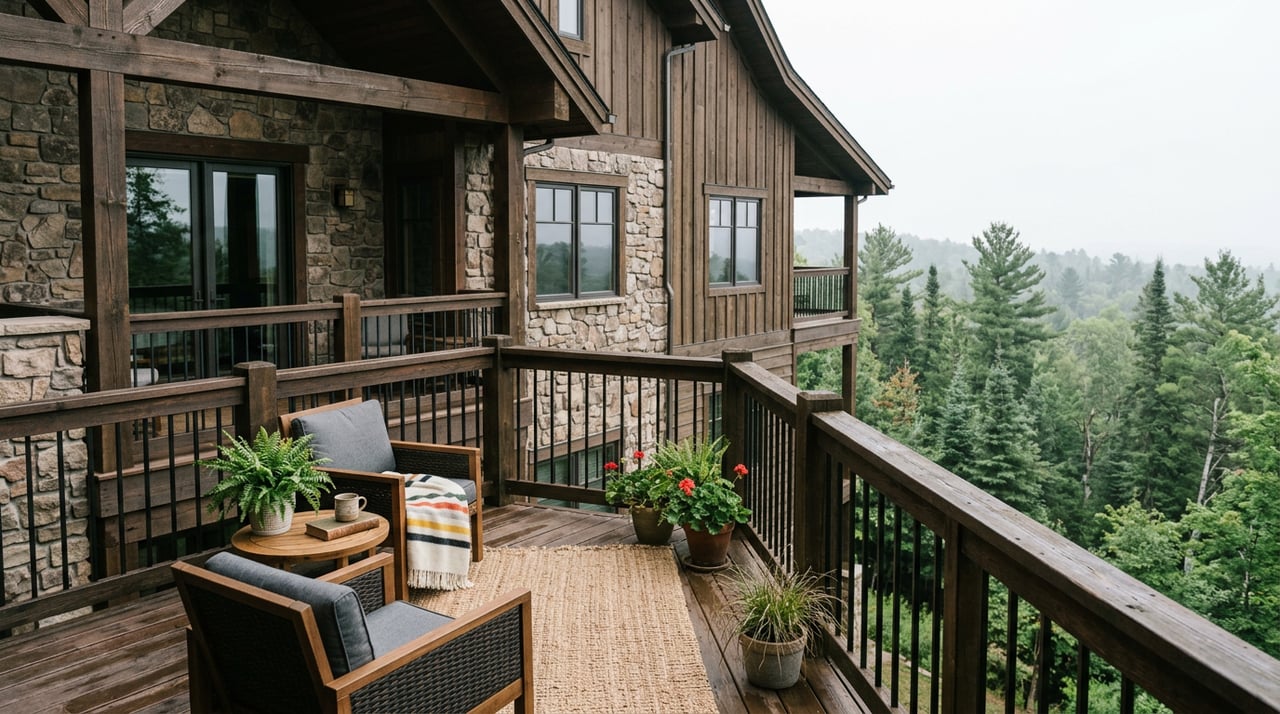
In Breckenridge, the License Is the Asset. The House Is Just Where It Sits.
September 17, 2026
September 17, 2026
A buyer falls for a place near the base of Peak 8. The listing mentions strong rental income, a full summer and winter calendar, glowing guest reviews. The math looks clean: carrying costs covered, upside beyond that. The offer gets written on the strength of that history.
Then escrow closes, and the buyer discovers the number that mattered was never on the listing at all. In Breckenridge, a short-term rental license belongs to the person who holds it, not the address it's attached to. When the property changes hands, the license doesn't come with it. The new owner starts from zero, in whatever zone that parcel happens to sit in, at whatever point that zone's waitlist happens to be.
That single mechanic is the thing worth understanding before you write an offer on anything in Breckenridge with rental income in the plan. The house is not the asset you're buying. The licensing path is.
Every STR license in town is an Accommodation Unit License issued by the Town of Breckenridge, and it's tied to the owner of record, not the parcel. Sell the house, and the license terminates. The buyer has to apply fresh, and gets evaluated against whatever cap and waitlist status applies to that zone on the day of application, not the day the seller first got licensed years earlier.
This means a seller's rental history is a description of what the seller was allowed to do, not a preview of what you'll be allowed to do. A property with five years of strong nightly bookings can be legally unrentable the week after you close, if it sits in a zone that's now over its cap. The listing photos and the guest reviews don't change. The zone does the deciding.
Breckenridge splits STR licensing into four zones, and each one currently tells a different story about how fast, or whether, a new buyer can get licensed.
| Zone | What it covers | Status as of mid-2026 |
|---|---|---|
| Resort Zone | Condo and hotel complexes built for tourists (properties like One Ski Hill, Beaver Run, and Crystal Peak Lodge) | No cap, no waitlist |
| Zone 1 | Main Street corridor, including Main, Ridge, and French Streets | Open, high demand but generally available |
| Zone 2 | Mixed residential closer to town center | Capped at 130 licenses, all issued, waitlist of 19 names as of July 2026 |
| Zone 3 | Single-family residential neighborhoods | Capped at 390, running 618 over cap as of July 2026, with 231 people on the waitlist and an estimated wait of 8 to 15-plus years |
Read that Zone 3 line again. A cap of 390 with 618 licenses already active means the town isn't managing scarcity there anymore. It's managing an overflow that predates the cap itself, and new licenses only open up when an existing holder sells or fails to renew. For a buyer whose plan depends on nightly income, a Zone 3 property isn't a slow path. It's effectively not a path at all inside any timeframe most people plan around.
If nightly income has to work, the Resort Zone and Zone 1 are where the math actually pencils today. Zone 2 means a real but survivable wait. Zone 3 means treating rental income as something that might happen for your grandchildren's ownership, not yours.
Here's the twist that catches even careful buyers off guard: a Breckenridge mailing address doesn't guarantee Breckenridge's rules apply. Some well-known areas near town, including Peak 7 and the base of Peak 8, carry Breckenridge addresses but actually sit in unincorporated Summit County, governed by an entirely separate licensing system.
That separate county system has its own uncapped Resort Overlay Zone, and it covers ground you wouldn't expect from the address alone. SkiWatch condominiums and the 4 O'Clock subdivision both read as Breckenridge on paper, yet fall inside the county's uncapped overlay rather than the town's four-zone system. So the same address prefix can mean either an 8-to-15-year wait or an immediate license, depending entirely on which side of an invisible jurisdictional line the parcel sits.
The only way to know for certain is to confirm jurisdiction and zone before you write the offer, using the Town of Breckenridge's own short-term rental information page and the county's parcel-level GIS tool. The listing description won't sort this out for you. Neither will the neighborhood's reputation.
Even in an open zone, getting licensed isn't free, and the fee structure has its own quirk worth knowing before you budget. Breckenridge charges two separate annual fees: a license fee that scales modestly by bedroom count, and a regulatory fee of $756 per bedroom with no upper limit. A four-bedroom house runs about $175 in license fees plus $3,024 in regulatory fees, for roughly $3,199 a year. An eight-bedroom property pays the same $175 base but over $6,000 in regulatory fees alone.
Layer onto that a separate check most buyers forget: the town can permit a rental and the HOA can still forbid it. Some condominium associations restrict or ban short-term rentals even in zones where the town has no cap at all. Confirming the town zone answers one question. Confirming the HOA's own rules answers a different one, and both have to clear before nightly rental income is a safe assumption.
If you land on a property in a capped zone and end up waitlisted, you're not entirely without options while you wait. Colorado law treats any rental of 30 consecutive days or longer as a standard lease rather than a short-term rental, which means no STR license is required to offer it. An owner sitting on a Zone 3 waitlist can still generate income through 30-day-or-longer stays, often marketed toward remote workers or seasonal residents, while the shorter-term license works its way toward the top of the list. It's not the nightly-rate model most buyers picture, but it keeps a property productive instead of sitting empty during a wait that can run into the double digits.
For anyone shopping Breckenridge with rental income as part of the plan, the sequence that protects you looks like this:
None of this shows up in the listing photos. All of it decides whether the number in your rental income spreadsheet is realistic or wishful.
If a seller says the property is currently a licensed rental, does that mean I can rent it too? No. The license is tied to the seller as the license holder, not to the address. It ends at closing, and you apply fresh under whatever cap and waitlist status applies that day.
Is there any way to speed up a Zone 3 wait? Only through attrition. Licenses in over-cap zones open up only when an existing holder sells, relinquishes, or fails to renew, so the pace is entirely outside a new buyer's control.
Does the license transfer if I'm buying from a family member or in a private sale? No. Non-transferability applies regardless of how the sale happens. Any change in ownership resets the license, and the new owner reapplies under current rules.
If you're weighing a Breckenridge purchase against its rental math, this is exactly the kind of detail worth sorting out before you fall for a listing rather than after. Krystal Knott and the team at Reside In Summit work through zone status, jurisdiction, and HOA rules with buyers before an offer goes in, not after the surprises show up. If you'd like a clear read on what a specific Breckenridge property or your current one can support, get a free home valuation and we'll walk through it together.

If you are looking for a dedicated broker who will not only put your needs first but will work hard to exceed your every expectation, give Krystal a call. She and her unmatched team of professionals are eager to show you that there is no better choice in Summit County to buy or sell your home.